If you have been around surveying for a while, that sentence probably brings back a few memories. If you are new to the profession, it may sound like complete nonsense.
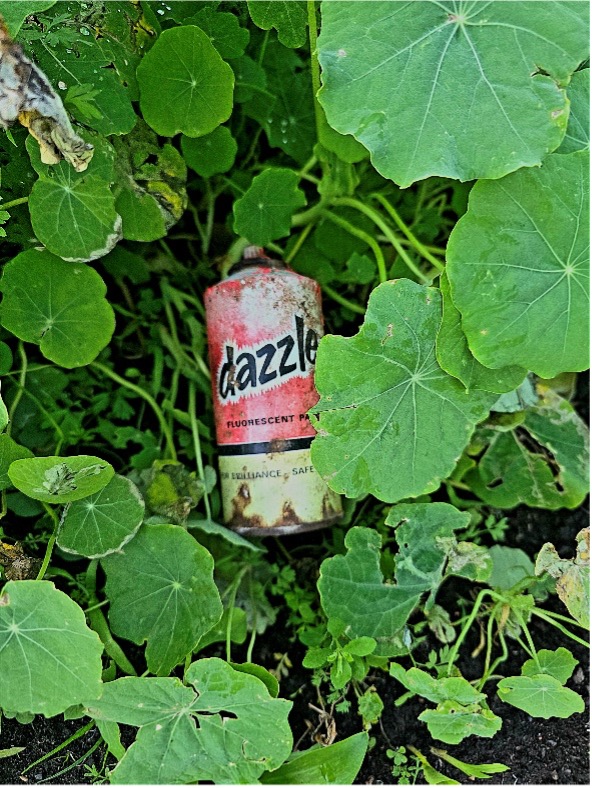
Dazzle was once a well-known brand of spray paint used by surveyors in the field. The cans are no longer made, but the name has stuck around. Like Kleenex or Band-Aid, it became the word people used, even after the product itself disappeared.
Recently, one of these old cans was found in a dense patch of native bush, sitting near a survey mark that had been placed more than 30 years earlier. It was probably left behind by a surveyor who had spent the day carrying a Wild T2 through the scrub, with a chainman following close behind.
To most people, that might raise a reasonable question: why are surveyors out there looking for old marks in the first place?
We hear this from clients all the time. Survey quotes often include phrases like “search for existing marks”, “verify survey control”, or “traverse existing marks”. These items can seem confusing, especially when the client is focused on the final result: a few pegs in the ground.
But those old marks matter.
We have always held onto these parts of the work as we look to retrace the steps of those surveyors before us. Retracing the steps of those before us, an axiom that is instilled in us since our first days at Survey School. The idea of retracing remains just as important today as the day that can of dazzle was tossed in the scrub.
Under the Cadastral Survey Rules 2021, surveyors have a duty to gather and interpret evidence relevant to the position of a boundary. That evidence may include old survey plans, previous measurements, existing marks, occupation features, fences, walls, kerbs, and buried survey monuments. In practise, the requirement to retrace and discover evidence is firmly entrenched in law.
In practice, that means your surveyor may spend time away from your property before placing any pegs at all. They may walk nearby streets, search through neighbouring land, dig small tidy holes in the berm, or disappear into the bush with a metal detector and spade.
It may look like they are wandering, maybe even a little lost. They are not.
They are gathering evidence.
A carefully formed lead plug in a kerb, an old iron tube buried deep under the lawn, or a mark hidden in the bush can help confirm how a boundary was originally intended to sit. Without that evidence, a surveyor cannot simply guess, measure from the nearest fence, or place pegs where they seem convenient.
This is why a boundary survey involves far more than the final visible result.
So, if you are planning a new fence, worried about a building near the boundary, buying land, subdividing, or preparing for a new build, it pays to involve a surveyor early.
Yes, the final product may look like a few wooden pegs. But behind those pegs sits a process of research, investigation, measurement, interpretation, and professional judgment.
The pegs are just the piece left behind.