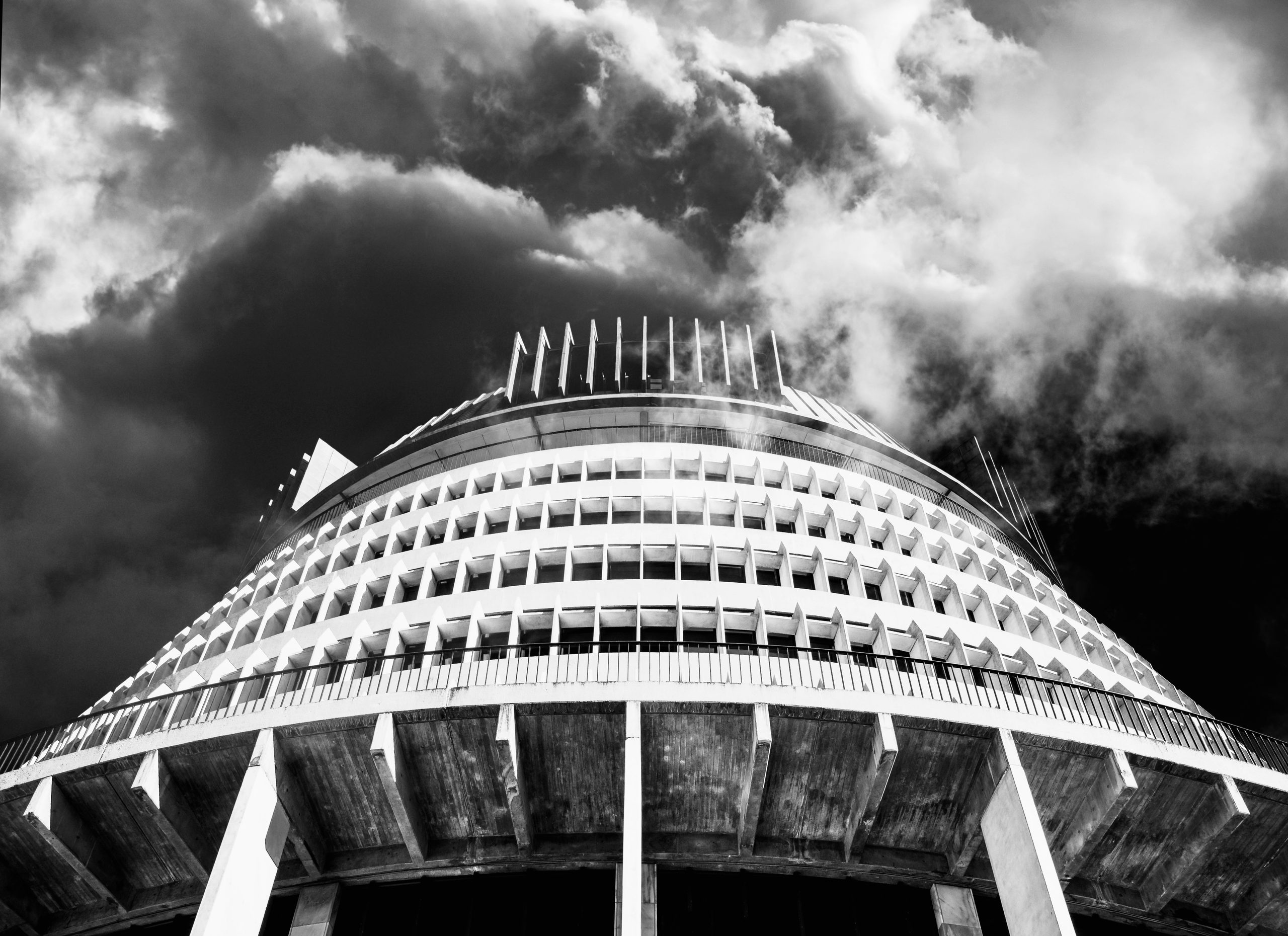
The four horsemen of the apocalypse arrive on coloured horses personifying conquest, war, famine and death. RMA reform may be less theatrical, but its effects could be strangely familiar: force used to bring about change, new conflicts between old stakeholders, scarcity imposed through competing demands and the end of many processes we currently take for granted.
At face value, the reforms appear to be a serious attempt at fixing a system often perceived as slow, expensive and unpredictable. But they are also a reminder that every effort to make the world simpler must leave behind some of the richness that comes from a world full of competing values.
The values of a planning system often lie sly and unseen, like the foundations of a building. Any building is useless if its foundations have been put in the wrong place.
The philosopher C. Thi Nguyen characterises the simplification of values through Four Horsemen of Bureaucracy:
- Scale
- Mechanical Rules
- Replaceable Parts
- Centralised Control
RMA reform is not about making the planning system easier – it’s a line in the sand about what we are prepared to give up to make it so.
Scale
Scale gives us the power of portability. He asks us to sacrifice context.
Scale promises a planning system that works from Kaitaia to Bluff. Nationally consistent zones and definitions provide a common planning language and make development easier to describe. I’m sure many developers will not mourn the loss of planning dialects.
But a planning system that describes everything, everywhere will also struggle to describe anything, anywhere.
A national standard can identify a house, a road and a river. What it cannot know is which road floods every winter, which house catches the late evening sun or which river is popular for swimming. Those things only become visible when you get close enough to see the place itself.
That is the quiet power of portability. What the planning system cannot describe, it cannot see. What it cannot see, it cannot value. The values that make places truly great come from their context.
Rules
Rules offers us the power of accessibility. What he asks us to sacrifice is adaptability.
Rules gives the planning system a playbook that everyone can understand. A proposed development either complies or it does not. Decisions become easy to make, explain and defend. Ignorance is no excuse.
A planning system rule works so well because it doesn’t need to ask why. On the other side of a yard could be a bedroom or a garage – it’s all the same to a rule.
Rules make hard decisions easy by deciding in advance the values that matter. Uncertainty is displaced by certainty. Outcomes become outputs. Your neighbourhood becomes a permitted baseline.
That is the end result of accessibility. Values are decided in advance, from an ivory tower in the past. But the values that make places great are only found when a rule is no longer asking the right question.
Parts
Parts promises us interchangeability. The sacrifice is specificity.
Parts allows a planning system to treat one house much like another. They all have windows, yards, outdoor living space, outlook and a shadow. These things can be measured, compared and substituted.
But houses also have families, artwork, games and memories. A developer can estimate the cost of physical space, but not the mental space needed to make a house a home.
The planning system should begin where measurement runs out. Reducing development to parts may make administration easier. But it also removes the need for judgement at the precise moment when judgement matters the most.
That is the danger of interchangeability. A planning system becomes easy to administer when everything that looks the same is treated the same. But the values that make places great are often found in the small differences, not the big similarities.
Control
Control offers us the power of coordination. What he asks us to sacrifice is autonomy.
Control provides a planning system that knows where it is going. National direction promises the integrated alignment of development with environmental protection. Progress is streamlined, or steamrolled, depending on your perspective.
In a planning system, control is about deciding who gets to decide.
Centralised control can plot a course long before anyone takes the wheel. But places are not ships. They have no destination and no captain. They are continually re-created by the people who live there, with the values they attach to them. The journey is the destination.
That is the risk of coordination. A planning system becomes easier to steer when there are fewer hands on the wheel. The values that make places great actually come from the very process of deciding where we want to go.
Value capture is… where your values are rich and subtle or in the process of developing that way. And you get put in a setting or near a technology or an institution that presents you with a simplified, typically quantified version, and the simplified version takes over.
C. Thi Nguyen
RMA reform is often framed as a ‘hard reset’. But the game hasn’t changed. Values still matter. For landowners and developers, the practical lesson is straightforward: do not wait for Parliament to decide which of your values matter.
At Infill, we think the planning system should make good development easier and bad development harder. That’s why we only do good development. Start with your site. Understand its hazards, infrastructure, topography and context.
The score matters. It just should not become the game.